Credibility of fiscal promises is a virtue that no finance minister can afford to lose.
In essence, follow the private-equity approach to personal investing and treat each investment decision as if it is a matter of life-or-death, because it is, suggests Avinash Luthria.
The initiative is one of the several steps which the government has announced in order to improve ease of doing business in India and attract investments to boost manufacturing in the country

Access to India's defence market must be made conditional -- available only to those who are ready to make a long-term commitment in India, argues Ajai Shukla.

Foreign airlines can now pick up 49 per cent stake in India's domestic carriers, a step that is expected to give a boost to cash-strapped aviation industry.
World's largest private equity firm Blackstone, which is planning to raise $4 billion from an initial public offer in the US, may further boost its investment in India after closing the public issue.

So vaccinate employees and families, staff at home, rickshaw drivers, milkmen, service providers, shopkeepers and street vendors, says Naushad Forbes.
The regulator may float consultation papers for FPIs and private equity funds and the final decision will be taken after taking into account views of all the stakeholders

The pandemic has confined students across all ages to home and digital education is the only way to continue learning.

Twenty years after India's insurance sector was opened up, unshackling the control of state-owned companies, as many as 50 private players have set up shop. Along with their foreign partners, private players have brought about a sea change in the product offering, distribution and underwriting processes, and services levels. Yet, India's insurance penetration needle has not moved much.
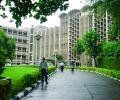
Contributions made to public funded universities, IITs, national laboratories and autonomous bodies engaged in conducting research in science, technology, engineering and medicine has now been recognised as part of CSR by the government.

Although as per the IMF-OECD estimates, an incremental growth of 1.8 per cent in global GDP is achievable
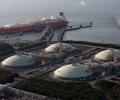
Around 15 years ago, when Reliance Industries (RIL) struck natural gas in the Krishna-Godavari (KG) basin off the east coast, the government made plans to supply that fuel cheaply to scores of generators that sprang up in India triggered by the discovery. Most of the plants, which account for 6 per cent of India's total generation capacity, operate sparsely after the KG-D6 area first failed to meet production targets, and then finally shut shop. Affordable domestic gas was why those thermal plants came up and the rate of the fuel today is why those generators hardly operate. Record liquefied natural gas (LNG) rates may yet again unravel India's ambitions to expand use of gas in industries, households and vehicles. Rates, while volatile, may stay strong this decade as developed nations with higher purchasing power embrace gas as the transition fuel.

The central government's deposits with the RBI had fallen to just Rs 100 crore as of June 8.

RSS-aligned Bharatiya Mazdoor Sangh (BMS) on Monday expressed disappointment over the government's budget proposals with regard to divestment and foreign direct investment, especially in the insurance sector. The BMS, however, lauded the government for its current efforts on the massive vaccination programme, a special scheme for tea workers in West Bengal and Assam, labour oriented push on infrastructure projects in construction sector and development of five major fishing harbours viz. Kochi, Chennai, Visakhapatnam, Paradip, and Petuaghat as hubs for economic activities etc. On other Budget proposals, it said in a statement that "mixing the beautiful concept of Aatmanirbhar Bharat with FDI and disinvestment in the Union Budget is disappointing for the employees".

In 2014-15, capital expenditure in the April-September period was Rs 99,100 crore.

Budget for 2022-2023 has returned to its agenda for protectionism in the name of creating a self-reliant India, points out A K Bhattacharya.
How just a few sentiment boosting measures by the government will go a long way in turning back the attention of foreign investors on India.

The corridor is expected to attract around Rs 1,250 billion investment and create 4,00,000 jobs. It will start from Mysore, pass through Bengaluru in Karnataka, to connect with Chennai, Coimbatore, Salem and Tiruchy in Tamil Nadu.

Some sectors like aviation, hospitality, travel and tourism, and automobile have witnessed zero cash flow since the lockdown began.

Post-elections, the pace is expected to be greater for inbound deals, which have been largely pushed back for many months now for want of better clarity on the policy stance of new government, experts said.

The government will have to get projects moving.

The economy has shown sharp resilience in the past and has also bounced back in good time. We could hence expect a similar trajectory next year, observes Madan Sabnavis, chief economist, CARE Ratings.

Housing sector to benefit from Budget.
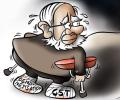
While GST and insolvency laws are among the major achievements of the Modi government, the list of failures include demonetisation, toxic banks, manufacturing hiccups and most prominently bizarre job creation figures. Mihir S Sharma takes a look at the four years of Modi government.

Finance Minister Arun Jaitley said that at a time when the private sector has been somewhat conservative in investments, public investment always takes the lead.

'The competition between the two is definitely going to be of great interest to the Indian market.'

The recent circular follows the 'true-to-label' concept, but large funds in the multi-cap category may be forced to merge in the absence of sufficient small-cap options.

Reports suggest state-owned banks have lapped up Rs 40,000 crore, so far, using both bonds and equity instruments. The question, though, is whether there will be a perceptional change for PSB stocks.

Fifteen stations might be taken up in the first stage with an investment of Rs 6,000-7,000 crore.

The Reserve Bank on Friday retained the GDP forecast for the current financial year at 9.5 per cent and flagged global semiconductor shortages, elevated commodity prices and potential global financial market volatility as downside risks to economic growth. In his address after the three-day meeting of the rate-setting panel, RBI Governor Shaktikanta Das said recovery in aggregate demand gathered pace in August-September, and it is reflected in high-frequency indicators, like railway freight traffic; port cargo; cement production; electricity demand; e-way bills; GST and toll collections. "The ebbing of infections, together with improving consumer confidence, has been supporting private consumption," he said, and added the pent-up demand and the festival season should give further fillip to urban demand in the second half of the financial year.

Experts said the risks associated with the Indian Experts say that aviation sector would keep investors away from airline stocks.

India needs sustained GDP growth of 9-10 percent - Jaitley

The government has spent a little less than one-third of the Budget estimate of capital expenditure, it can still spend about Rs 20,000 crore this year without disturbing its fiscal deficit target.

'Ultimately, people will revolt at one time or the other.' 'You cannot feed the public with cultural issues forever.'

Germany is now sitting on a mountain of savings.
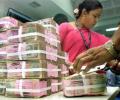
Capex for next year expected to be up 25% to Rs 3 lakh crore

Presenting the Narendra Modi government's maiden Rail Budget, Railway Minister Sadananda Gowda announced setting up of logistic parks and private freight terminals on PPP model.
.jpg)
TPG was one of the first global private equity firms to enter Asia, opening a Shanghai office in 1994.

